11 October 2026
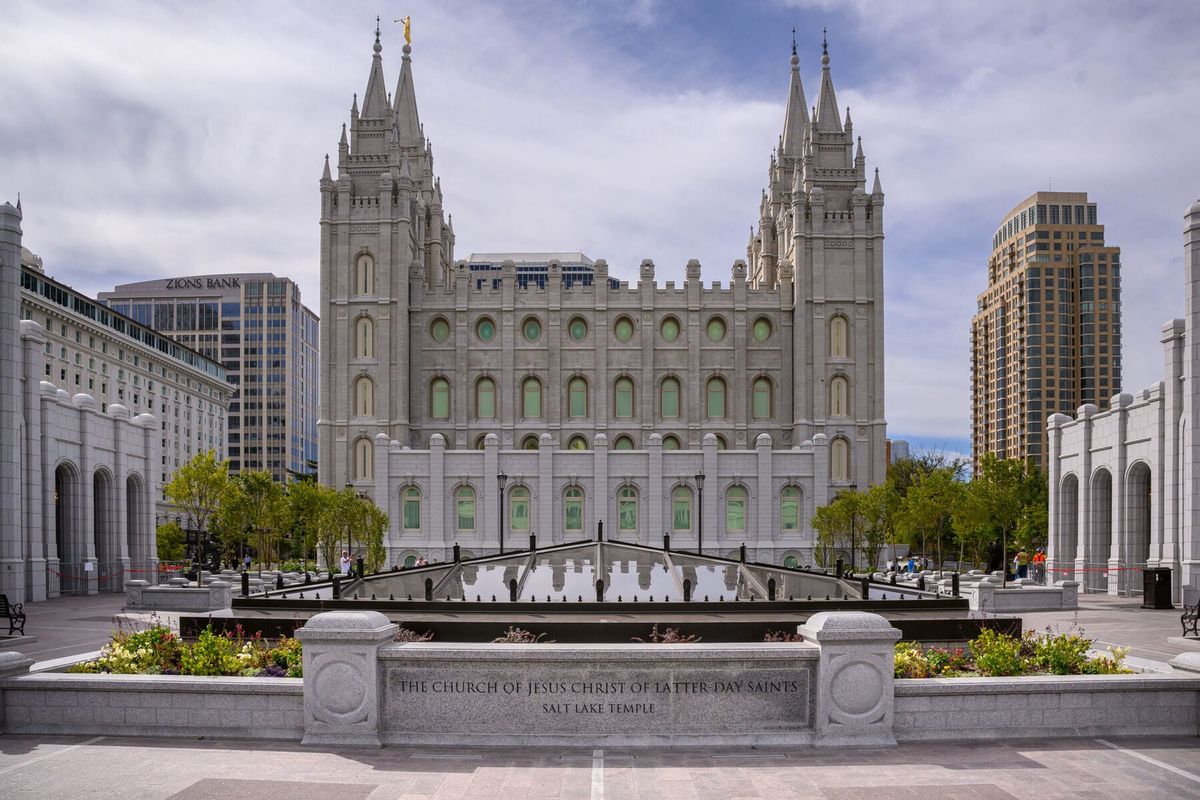
Come worship and resjoice with the Lord in the house of the Lord, in temple doctrine and in your own personal temple culture.

Sacrament Meeting Program
Presiding: Bishop Todd Christensen
Conducting: Brother Grady Stoner
Opening Hymn: #1065 - Isaiah Said
Invocation: By Invitation
Ward Business
Sacrament Hymn: #181 - Jesus of nazareth, Savior and King
Administration of the Sacrament
Testimony Meeting
Closing Hymn: #85 - How Firm a Founcation
Benediction: By Invitation
Messages From General Conference
Come to the Lord in His Holy House
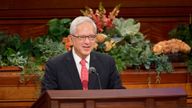
By Elder Gerrit W. Gong
Of the Quorum of the Twelve Apostles
Welcome to conference!
Why did the temple workers cross the road? To help the people on the other side.
In a world of commotion, contention, and cares, the Lord invites us to a place of spiritual safety, harmony, and holiness—the house of the Lord.
There He teaches us His plan of happiness. He endows and blesses us. He prepares us to come home.
In our day, the Lord is bringing His holy house and covenant blessings closer to our homes and hearts. Foundational doctrine can deepen our love for the Lord. It can increase our understanding of the temple and personal temple culture.
First doctrinal foundation: Heavenly Father’s work and glory is for us to return to Him, united as families, happy and forever.
Temple marriages are meant to last forever. Covenant belonging unites a husband, wife, and children, not until death do we part, not until convenience or attraction fade, but by covenant commitment, sacrifice, and consecration. Consistent spiritual nourishment through prayer, scripture, church attendance, service, etc. blesses and sanctifies our marriages and relationships.
Second doctrinal foundation: moral agency. The morning stars sang for joy. We chose God our Father’s loving plan to learn by our own experience. Jesus Christ redeems us from sin, physical death, and spiritual separation.
God’s redeeming work is majestic in its sweep and reach. As the Prophet Joseph Smith saw in vision, every person, except a very few, is saved in a kingdom of glory. We can inherit a glorified, paradisiacal earth and live in the highest degree of celestial glory with God our Father and Jesus Christ.
Agency means we choose, directly and indirectly, our relationships. God will not require a woman or man to be sealed or live in an eternal relationship he or she does not choose.
Agency, faith and repentance, and Jesus Christ’s Atonement make change and forgiveness possible. As we become new creatures in Jesus Christ, we sweeten our relationships. Temple service evokes our Savior’s Atonement. It softens hearts on both sides of the veil.
We find hope and healing when we perform temple ordinances for family members with whom we may earlier have had difficult relationships. Jesus Christ can help us mend, forgive, move forward. We exclaim: “When I did the temple work for my family member, my heart softened.” “I could forgive.” “I was freed.” “Anger and bitterness left.” “I felt peace for the first time.” We may even come to desire sealing with those family members.
Rich blessings await. Please “do not procrastinate the day of your repentance until the end.” Please do not deliberately delay the spiritual peace and joyful freedom Jesus Christ wants you to have now.
Third doctrinal foundation: When the Holy Spirit of Promise witnesses and confirms the efficacy of ordinances and covenants, they become binding in time and eternity. In His sacred role as Holy Spirit of Promise, the Holy Ghost “witnesses to the Father that the saving ordinances have been performed properly and that the covenants associated with them have been kept.”
As we honor our covenants, the Holy Spirit of Promise seals our relationships with “efficacy, virtue, [and] force.” They are written in the Lamb’s book of life.
In contrast, we would not expect ordinances and covenants we do not honor in faith or action, do not choose or desire, or perhaps even disregard or mock to be binding upon us on earth or in heaven.
With this doctrinal foundation, let us consider five elements of personal temple culture.
First, a temple dedication is a beginning. We are naturally excited when a temple is announced, groundbreaking and construction occur, and dedication takes place. Each is a milestone.
But please, while we are grateful our temples and everything in them are physically beautiful, let us celebrate and treasure even more the spiritual blessings temples bring.
President Dallin H. Oaks exercises all priesthood keys on earth, including keys pertaining to temples. Next Sunday, I am assigned to dedicate the Miraflores Guatemala City Temple. This year, across the world, we anticipate the First Presidency and Quorum of the Twelve Apostles will dedicate 21 temples and rededicate 1 temple.
Second, over the years, when temples were distant, faithful members sacrificed to be sealed in the temple. Some members could come to the temple only once or twice in their lives. In some cases, once in a year.
Today, as temples come closer in many places, we can manifest the precious spirit of temple sacrifice in new ways. We can come to the temple more often. We can search and bring more family names to bless deceased loved ones. As the seasons of our lives allow, we can regularly serve in the Lord’s house, both as temple patron and as temple ordinance worker.
Third, while each temple uniquely fits its place, culture, and circumstance, everything in each temple testifies of Jesus Christ. Temple leaders unitedly love the Lord and focus on temple patrons and workers. In each temple, by authority and in the name of the Lord, ordinances and covenants are truly and faithfully performed and properly recorded. When patrons do their best, our service is acceptable to the Lord.
Fourth, temple sacrifice and temple service include a spirit of gratitude. I mention this with great respect and love. On occasion, a few members may think attending the temple is a right or entitlement rather than a sacred privilege and may be impatient or not understand when assistance comes slowly or is less than they want.
On occasion, some members may feel a temple is smaller or less ornate than they expected. I once heard, “Elder Gong, we are happy to have a temple but sorry it is a small temple.”
I said, “Dear brother, dear sister, ordinances are not big or small. Covenants are not big or small. Please let us never speak of a temple as big or small, elaborate or plain. Let us always only speak with love and gratitude for ‘Holiness to the Lord, the House of the Lord.’”
Please, dear brothers and sisters, wherever we live, let us always be grateful for the gifts of eternity sacred temples bring. Look for the miracles. New converts sometimes testify family on the other side of the veil led the missionaries to find and baptize family on this side of the veil so their family could be united.
Some new converts feel alone. But you are part of Heavenly Father’s family. And when you take family names to the temple, your eternal family extends on both sides of the veil. My father and mother joined our Church as the only members in either of their families. Today, family history and genealogy help connect many Gong and Char family generations. Whatever generation you are in the Church, in the chain of your eternal family, please be a strong link.
Fifth, where possible, please consider saving for and buying your own ceremonial temple clothes—cap or veil, robe, sash, and apron. As we reverently care for and use our own temple clothes, our children and grandchildren can see we love the Lord and our temple covenants.
I know a family of modest means. At their widowed mother’s request, the children saved and purchased their mother her own ceremonial temple clothes. Their mother loved using her own temple clothing as she regularly attended the temple for many years. When their mother passed away, the family honored their mother’s request by burying her in her temple clothes. Their dear mother was ready to enter eternity prepared for the glorious Resurrection.
Dear brothers and sisters, come worship and rejoice with the Lord in the house of the Lord, in temple doctrine and in your own personal temple culture.
So, why did the temple workers cross the road? So God and temple ordinances can protect, bless, and inspire; bring forgiveness, healing, and peace; and unite loved ones here and away. May these blessings of eternity be ours in even greater abundance, I pray, in the sacred name of Jesus Christ, amen.
 Gerrit W. Gong